
2025-02-21 1,193

A research team led by Professor Kim Mi-kyung from the Department of Chemical and Biological Sciences at Sahmyook University has discovered that ‘exerkines’—substances released by muscles during exercise—may help alleviate Alzheimer’s disease by reducing neuroinflammation.
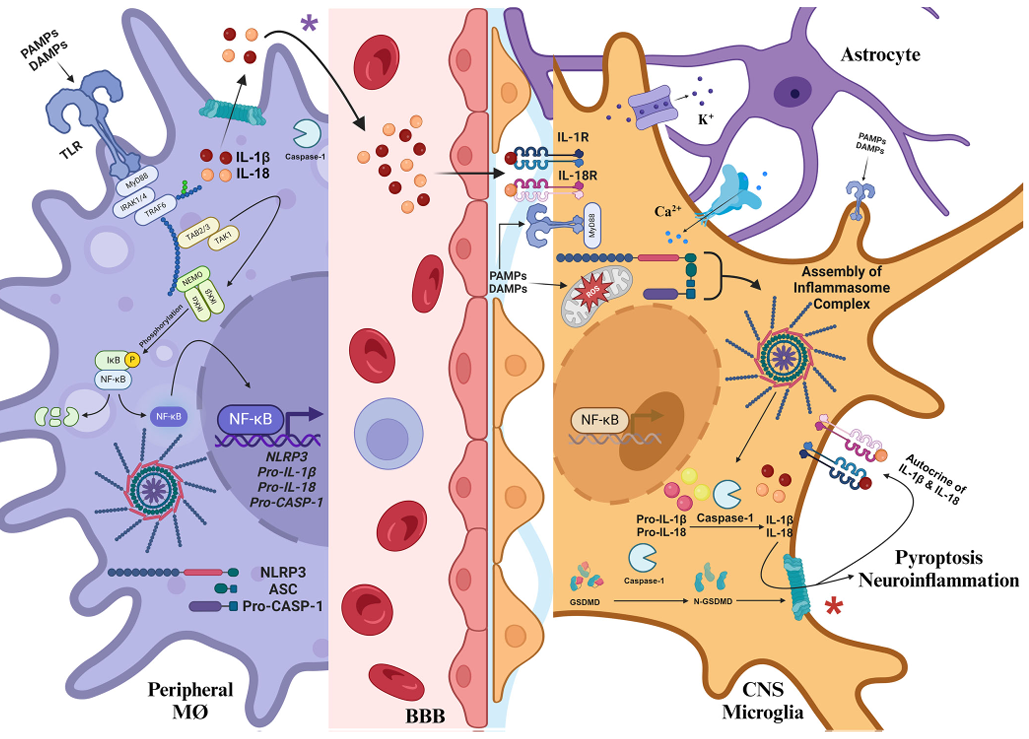
Their study, titled “Exerkines Mitigating Alzheimer’s Disease Progression by Regulating Inflammation: Focusing on Macrophage/Microglial NLRP3 Inflammasome Pathway,” was published on December 6 in the esteemed journal Alzheimer’s & Dementia (Impact Factor = 13.1, JCR Top 1.7%) in the field of Clinical Neurology. The research has also been recognized for its significance by being listed in the Biological Research Information Center (BRIC) as one of the “People Who Shine in Korea.”
Alzheimer’s disease is characterized by the buildup of amyloid beta (Aβ) and hyperphosphorylated tau proteins (p-tau) in the brain, which leads to inflammation and damage to nerve cells. During exercise, muscles secrete physiological substances known as exerkines, which play a crucial role in reducing inflammation throughout the body and supporting the health of brain cells.
In this study, Professor Kim’s team specifically examined how exercise-induced exerkines alleviate inflammation in both the brain and the body. They focused on the NLRP3 inflammasome, which has recently garnered attention, and investigated how it is regulated by exercise. The NLRP3 inflammasome is vital for controlling inflammatory responses, but when overactivated, it can promote damage to brain cells. The researchers found that exerkines inhibit NLRP3 signaling, thereby alleviating inflammation and offering protection to the brain.
This research highlights that exercise is not only beneficial for physical health but also plays an important role in brain protection.
To substantiate their findings, Professor Kim’s team systematically explored the relationships between exerkines, the NLRP3 inflammasome, and Alzheimer’s disease. By integrating a wealth of recent literature, they provided a comprehensive explanation of the connections between exercise, inflammation, and neuroinflammation, showcasing their academic rigor.
Professor Kim stated, “By scientifically elucidating how non-pharmacological approaches like exercise contribute to reducing neuroinflammation and protecting neural health, I hope to pave the way for new research and treatment strategies for Alzheimer’s disease.”
Building on this work, Professor Kim is currently investigating the mechanisms of inflammation regulation in both the peripheral nervous system (PNS) and central nervous system (CNS). She is also developing a model to predict cognitive decline, specifically looking into how exercise intensity affects the role of exerkines. Her goal is to create effective prevention and treatment strategies for cognitive impairments.
Professor Kim expressed her commitment to ongoing research, saying, “I will continue to pursue academic challenges and strive to produce findings that can provide practical benefits to individuals facing cognitive impairments.”
- There are no registered attachments.